
Drs. Michael Shwartzstein and Robyn Croutch bring over 45 years of experience to their chiropractic practice, focusing on holistic care for brain and body health. Inspired by a close friend’s son with ADHD, they integrated BrainCore Neurofeedback, achieving life-changing results for patients with autism, anxiety, and attention challenges. Dr. Croutch holds Dr. Amen’s Brain Health Professional Certification, and they also use thermography for early health detection. Together, they provide compassionate, comprehensive care for whole-body wellness.
When parents think about ADHD, they often focus on attention, impulsivity, or hyperactivity. But behind those behaviors is something deeper, emotional regulation. Many kids with ADHD struggle not only to stay focused but also to manage frustration, disappointment, and overwhelm. Neurofeedback offers a gentle, brain-based approach that helps children strengthen emotional control and self-regulation naturally.
At our office in Port Washington, we use BrainCore Neurofeedback to help children create balance in their brainwave patterns so they can think clearly, respond calmly, and recover faster from stress. Emotional resilience is one of the most transformative changes that comes from this work.
Understanding the ADHD Brain
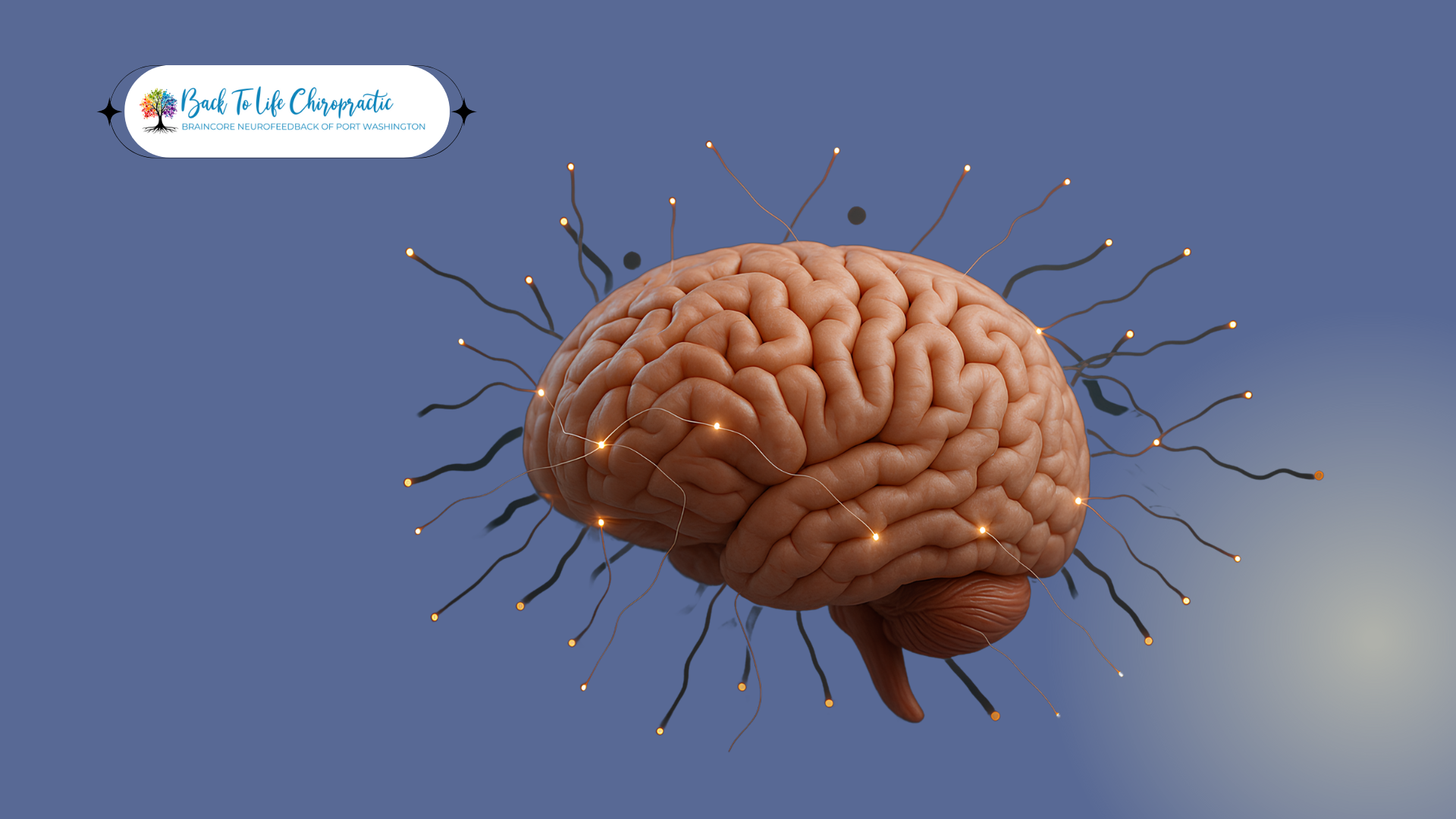
In children with ADHD, brainwave patterns can become imbalanced. Areas of the brain responsible for focus, impulse control, and emotional regulation, especially the frontal lobes often show overactivity or underactivity when we measure them with a QEEG brain map.
For example, a child might produce too many slow waves and not enough fast ones, which makes it harder to shift gears when faced with challenges. This imbalance affects more than attention; it shapes how they process everyday life.
When a child’s brain can’t self-regulate, small stresses can feel overwhelming. A correction from a teacher can feel like rejection. A sibling disagreement can lead to a full-blown meltdown. These reactions are not defiance or willfulness. They are signs that the brain hasn’t yet learned how to find balance.
What Emotional Resilience Really Means
Emotional resilience is the ability to feel strong emotions and still return to calm. It’s not about being composed all the time but about bouncing back when something goes wrong. Children with ADHD often stay stuck in emotional overdrive because their nervous system remains in fight-or-flight mode.
When the brain learns to self-regulate, the body follows. Calm becomes easier to access. Frustrations feel smaller. Confidence grows because the child begins to trust their own ability to manage emotions.
How Neurofeedback Strengthens the Brain
Neurofeedback teaches the brain how to find balance through a process called operant conditioning. During a session, your child watches a movie or plays a simple game on a screen. The screen responds to their brainwave activity in real time. When their brain creates a balanced pattern, the movie plays smoothly or the screen brightens. When the pattern moves off balance, the feedback changes.
The brain begins to learn what it feels like to be calm, organized, and alert. Over time, those patterns strengthen, just like practicing an instrument or a sport. The process is gentle and completely noninvasive. It doesn’t force change; it encourages it.
Parents often tell us they start noticing little shifts first. Homework time becomes less tense. Mornings go more smoothly. Meltdowns are shorter and easier to recover from. These small changes add up to a child who feels more centered and in control.
The Link Between Brainwaves and Emotions
Every emotional state is tied to a particular brainwave pattern. Anxiety often shows up as excessive fast activity, while emotional shutdown can appear as too many slow waves. Neurofeedback helps bring these patterns into balance, which naturally improves emotional regulation.
When the brain becomes more balanced, children recover more quickly from upsets. Parents notice that their child still experiences emotions but no longer feels controlled by them. That quick recovery is what true resilience looks like.
A Holistic Approach That Supports the Whole Child
At Back to Life Chiropractic and BrainCore Neurofeedback, we believe in supporting the brain and body as one system. Chiropractic care enhances communication through the nervous system, which amplifies the benefits of neurofeedback. Both approaches help restore balance to the body’s internal wiring so healing and growth can happen naturally.
We also guide families on everyday habits that strengthen these gains, steady sleep schedules, nourishing foods that balance blood sugar, consistent movement, and mindful use of technology. These small lifestyle choices support the brain’s ability to maintain new patterns and make lasting progress.
What Parents Notice Over Time
The first signs of progress are often subtle. A child who once reacted with tears or anger may pause before responding. A student who dreaded schoolwork may start to approach it with more patience. Teachers might comment on improved focus, smoother transitions, or a calmer classroom presence.
Over time, the deeper changes take root. Confidence increases. Relationships improve. Kids begin to trust their ability to handle life’s ups and downs. Because neurofeedback works by teaching the brain new patterns rather than masking symptoms, the results tend to be long-lasting.
Rewriting the Story of ADHD
ADHD does not define your child. It simply reflects how their brain processes information and stress. Neurofeedback helps the brain find a more balanced rhythm so your child can access the best parts of who they are, creative, curious, and resilient.
When emotional regulation improves, everything else follows. Focus, learning, and social connections all become easier. The child begins to experience life from a place of confidence rather than chaos.
Personalized Support for Every Family
Every child’s brain is unique, and so is every plan we create. Through QEEG brain mapping, we can see exactly where patterns are out of balance and design a neurofeedback program to support better focus, calm, and emotional control.
We take time to review the findings with each parent and create a plan that fits their child’s goals. We also provide tools for home that reinforce what the brain is learning in each session so progress continues between visits.
If you’ve tried medication, tutoring, or therapy and still feel like something is missing, neurofeedback may be the bridge that connects everything else. It gives the brain the structure it needs to integrate all those efforts.
Helping Kids Thrive
The goal of neurofeedback isn’t to change who your child is, it’s to help them feel more comfortable being themselves. When the brain learns how to stay organized and calm, the world feels less overwhelming. Emotional resilience grows, stress decreases, and confidence expands.
If your child is struggling with emotional ups and downs, poor focus, or ADHD-related challenges, schedule a BrainCore Neurofeedback consultation at Back to Life Chiropractic and BrainCore Neurofeedback in Port Washington. Together, we’ll explore how this natural, gentle process can help your child’s brain work at its best so they can thrive both at home and in school.